DEEPER STILL: Week Forty
Releasing the Offense & Offender
Matthew 5:44
“But I say to you, Love your enemies, bless those who curse you, do good to those who hate you, and pray for those who spitefully use you and persecute you. “
Reflections
To release something, you must first acknowledge you’re holding it. And when the offense is tied to trauma—abuse, betrayal, or deep injustice—you may find your hands clenched tightly with righteous anger, confusion, fear, and grief. That’s not weakness. That’s human. Some wounds go so deep, they mark the very way you interact with the world. To forgive in that context isn’t simple—it’s sacrificial and sacred. And, it takes time.
God never asks you to pretend that what happened didn’t happen or matter. He invites you to tell the truth about it—all of it. Real forgiveness doesn’t avoid reality; it acknowledges it with trembling honesty and then lays it at the feet of a Savior who understands injustice better than anyone else. Releasing the offense isn’t minimizing it—it’s surrendering its control. It’s refusing to let what was done to you shape who you are today or who you are becoming.
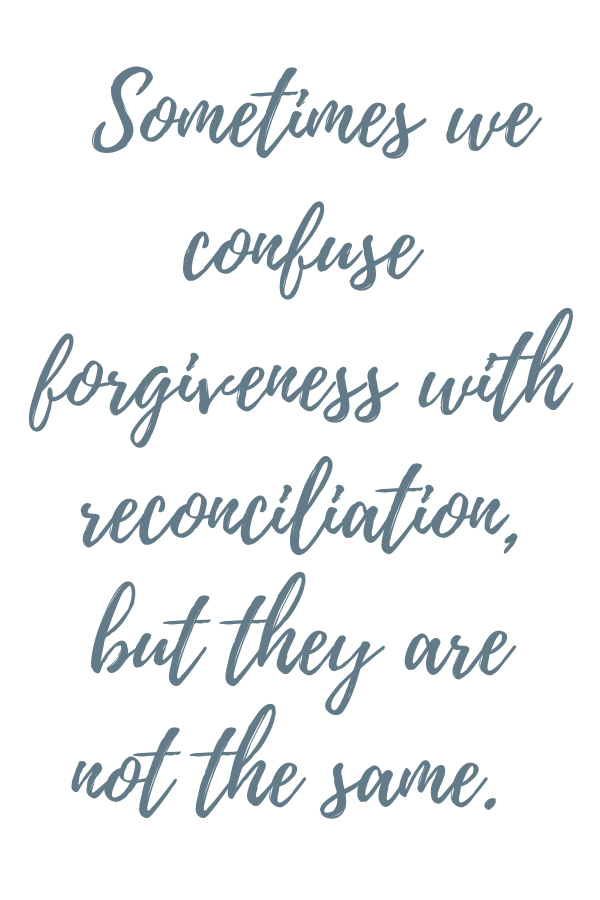
Sometimes we confuse forgiveness with reconciliation, but they are not the same. You can forgive someone and still keep firm boundaries in place. You can release your need for exacting justice and choose to forgive while still keeping your distance. Yet, something holy happens in the heart when you open yourself to the possibility of learning to love them again—not necessarily through trust or shared space, but through your posture before God. Love doesn’t always mean access. Sometimes it means praying blessings over them instead of bitterness, even when your heart still aches.
That kind of love doesn’t spring from your own strength. It comes from intimacy with Christ. Jesus said, “Love your enemies, bless those who curse you, pray for those who spitefully use you” (Matthew 5:44). That command can feel impossible when the pain is fresh. But healing can happen when you start to whisper prayers you don’t necessarily yet feel. “God, bless them. Heal them. Set them free from whatever brokenness led them to cause this harm.” These aren’t prayers of permission. They are prayers of freedom—for you and your offender.
To keep walking in that freedom of forgiveness and prayer, you must guard your mind and your mouth. Rumination is subtle—it disguises itself as processing, but often it’s just the rehearsal of pain. Gossip and venting are sometimes cries for validation, but they can also deepen the wound. When you catch yourself rehearsing the offense or sharing it in ways that dishonor the other person, stop. Bring those thoughts and words to God. Say, “Lord, I want healing, not a harbor for bitterness. Help me shut the door to resentment and open the door to grace.”
This kind of heart work is daily. Sometimes hourly. But as you return again and again to release the offense and the offender, your soul starts to soften. Your clenched fists loosen. You may never get the apology. You may never see justice fully done on earth. But you will know peace. And that peace—guarded by surrender, anchored in Christ—is worth every act of release.
Are you willing to pray for the one who hurt you? Are you willing to pray that God would make you willing?
Prayer
Lord, teach me how to love without enabling, to set boundaries without bitterness, and to pray blessings even when I still feel broken. Make me more like You.